
A Beginner’s Guide to Manifestation and Protection Tools

By Marianna Defendini
Exploring crystals, herbs, candles, journaling, and sacred practices for intentional living.
In a world where the hustle and bustle of daily life can often feel overwhelming, many individuals are turning to spiritual practices for grounding, reflection, and empowerment. The practice of manifestation and protection has grown in popularity as people seek meaningful ways to connect with their intentions and create supportive rituals in their daily lives.
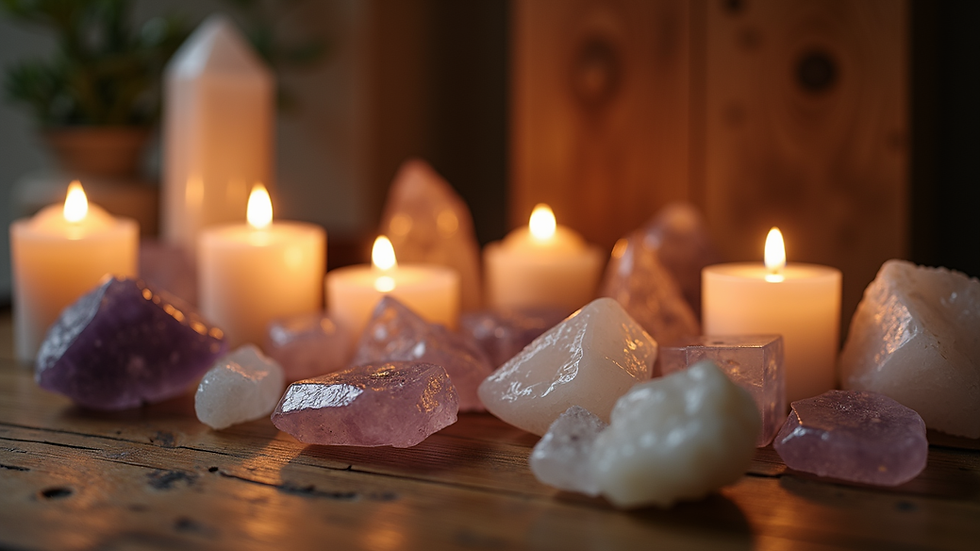
Whether you are a seasoned practitioner or simply curious about beginning a spiritual practice, the right tools can help create focus and purpose. From crystals and herbs to candles and journals, these supplies serve as physical reminders of the energy we wish to cultivate.
At Wildflower Collective, I view these tools not as magical shortcuts, but as companions on a journey of intentional living. Through tarot, handcrafted intention jars, nature-based practices, and community, my hope is to encourage people to slow down, reconnect with themselves, and discover their own version of everyday magic.
Understanding Manifestation and Protection
What is Manifestation?
Manifestation is the practice of bringing awareness and intention to the life you wish to create. While often associated with attracting desires, many practitioners view manifestation as a process of alignment rather than wish fulfillment.
Practices such as visualization, journaling, affirmations, and ritual can help clarify goals and reinforce positive habits. For example, someone seeking greater confidence may choose daily affirmations, work with symbolic tools, and create rituals that remind them of their personal strength.
The process becomes less about “getting” something and more about becoming the version of yourself that is prepared to receive it.
The Importance of Protection
Protection practices are found in many spiritual traditions around the world. They are often used to create energetic boundaries, encourage grounding, and cultivate a sense of safety and stability.
Protection may involve cleansing a space, working with protective herbs and crystals, creating intentional rituals, or simply taking time to reconnect with yourself after a stressful day.
The goal is not to live in fear of negative energy, but rather to create supportive environments where personal growth and manifestation can flourish.
Essential Tools for Manifestation
Crystals
Crystals are often used as symbolic tools within spiritual practice. Whether viewed as energetic allies or meaningful reminders of intention, they can help focus attention and reinforce desired outcomes.
Popular crystals for manifestation include:
• Clear Quartz — often called the “master crystal,” commonly used to amplify intention and focus.
• Citrine — associated with abundance, confidence, and prosperity.
• Amethyst — frequently used for spiritual growth, intuition, and inner reflection.
In my own intention jars, I often incorporate Clear Quartz to amplify the written intention placed inside the jar. Rose Quartz is another favorite for intentions centered around self-love, compassion, and emotional healing.
Candles
Candles represent the element of fire and are often used to symbolize transformation, illumination, and focused intention.
Common color associations include:
• Green — prosperity and abundance
• Yellow — confidence and clarity
• Purple — intuition and spiritual development
Many practitioners also work with black and white candles together, representing balance between shadow and light.
In my own practice and during intention jar ceremonies, I often light both a black candle and a white candle before beginning. The black candle represents the parts of myself that require protection, healing, honesty, and transformation. The white candle represents guidance, clarity, wisdom, and the light I wish to cultivate.
As part of my opening prayer, I invite both energies into the ceremony:
“I call on my shadow to protect me. I call on my light to guide me.”
Whether working with manifestation, healing, or protection, this practice reminds me that growth often comes from embracing both aspects of ourselves rather than rejecting one for the other.
Journals
A manifestation journal is one of the most accessible and powerful tools available.
Writing down intentions, reflections, dreams, and affirmations helps create clarity and provides a record of personal growth over time. Many people find that reviewing old journal entries reveals how much transformation has already taken place.
One practice I particularly enjoy is writing letters to each month as it begins. These letters become snapshots of my life—capturing my hopes, challenges, goals, and reflections at that moment in time.
Months later, I can return to those entries and reconnect with the version of myself who wrote them. Often I am reminded of prayers that were answered, lessons that unfolded, and growth that happened so gradually I almost missed it.
Journaling not only helps focus energy and intention, but also creates a meaningful relationship with ourselves over time.
Herbs and Botanicals
Herbal traditions have been part of spiritual and folk practices across cultures for centuries.
Common herbs used in manifestation work include:
• Lavender for peace and relaxation
• Rose petals for love, compassion, and heart-centered intentions
• Jasmine for intuition and spiritual connection
• Rosemary for clarity and focused intention
• Passionflower for dream work and inner guidance
These are some of the same botanicals I use when creating handcrafted intention jars, chosen carefully to support the purpose of each blend.
Essential Tools for Protection
Protection practices vary widely across spiritual traditions, cultures, and personal beliefs. Some practitioners work with herbs and crystals, while others incorporate prayer, sacred symbols, ancestral practices, or deity work.
Protective Symbols
Throughout history, people have used symbols as reminders of courage, faith, and protection.
One example is the Sword of Archangel Michael, often viewed as a symbol of truth, discernment, courage, and the cutting away of harmful influences. Many people call upon Michael in prayer when seeking strength, clarity, and protection.
Protective symbols can be deeply personal. Their power often comes from the meaning and intention we assign to them.
Protective Crystals
Several crystals are traditionally associated with protection and grounding:
• Black Tourmaline — commonly used for grounding and energetic protection
• Obsidian — associated with shielding and self-reflection
• Selenite — often used for cleansing and clearing stagnant energy
Protective Herbs
Many herbs carry protective symbolism and have been used in folk traditions for generations:
• Rosemary — protection and remembrance
• Basil — prosperity and blessing
• Mugwort — intuition and spiritual awareness
• Garlic — long associated with protection, purification, and warding away unwanted influences
In some modern spiritual practices, garlic is also connected with Hekate, goddess of crossroads, transformation, and liminal spaces. Offerings and symbols associated with Hekate vary greatly between traditions, but many practitioners feel drawn to work with her during periods of personal transformation and spiritual exploration.
Salt and Protective Boundaries
Salt has long been associated with purification, protection, and boundary setting.
Historically valued for both practical and symbolic purposes, salt continues to be used in spiritual practices today. Practitioners may place salt near entryways, use it in ritual baths, or incorporate it into protective workings.
Pink Himalayan Salt is often chosen for grounding and purification, while Black Salt is commonly associated with protection and energetic boundaries.
Like many spiritual tools, salt serves as a physical reminder of our intention to create safe, supportive spaces for ourselves and those we care about.
Working with Deities and Spiritual Allies
Many practitioners choose to work with deities, ancestors, angels, saints, spirit guides, or other spiritual allies as part of their protection practices.
Approaches vary widely and are often shaped by cultural background, personal experience, and spiritual belief.
Because this is such a rich and complex topic, I’ll be exploring deity work, symbolism, offerings, and spiritual relationships in future articles here on the blog.
Creating Your Sacred Space
A sacred space does not need to be elaborate. It can be as simple as a small shelf, a corner of a desk, or a quiet outdoor space.
Choose a location that feels peaceful and free from distraction.
Arrange your crystals, candles, journals, or meaningful objects in a way that feels natural to you. Add personal touches such as photographs, artwork, flowers, feathers, shells, or items collected from nature.
The purpose of a sacred space is not perfection. It is creating an environment that supports reflection, intention, and connection.
Recommended Reading for Further Exploration
Spiritual practices are deeply personal, and every practitioner develops their own path over time. Reading widely can be a wonderful way to deepen your understanding and discover what resonates with you.
Two books that have inspired my own journey are:
• The Sophia Code by Kaia Ra — a transformational exploration of self-healing, empowerment, and spiritual sovereignty.
• The Rose Codes: Book of Initiations by Mariya Nurislamova — an exploration of rose symbolism, divine feminine wisdom, ritual practice, and personal transformation.
While every reader will take away something different, these works offer thoughtful perspectives for those interested in spirituality, intuition, and personal growth.
Building Community Through Spiritual Practice
Historically, spiritual knowledge was often shared within communities. People gathered to exchange stories, herbal wisdom, seasonal traditions, and ritual practices.
In many ways, blogs and social media have become modern gathering spaces where people can continue sharing and learning together.
One of my hopes for Wildflower Collective is to create that sense of connection. Through this blog and on Instagram (@wildflowercollectivetarot), I share tarot reflections, intention jars, recipes, garden updates, seasonal living practices, and simple ways to bring more mindfulness into everyday life.
Wildflowers grow together, supporting one another while remaining beautifully unique. My hope is that Wildflower Collective becomes a place where people can gather, learn, share, and grow in their own authentic way.
Like wildflowers, may we continue to grow freely—rooted in who we are, connected to one another, and open to the wisdom that unfolds along the path.
Final Thoughts
As you explore manifestation and protection practices, remember that the most important tool is your intention. Crystals, herbs, candles, journals, and rituals are simply ways of focusing awareness and creating meaningful moments of connection.
Allow yourself to explore with curiosity. Trust your intuition. Keep what resonates and release what does not.
Whether you are seeking abundance, protection, personal growth, or simply a deeper connection with yourself, these practices offer opportunities to slow down, reflect, and engage with life more intentionally.
May your path unfold with clarity, purpose, and a little everyday magic.
With love and magic,
Mar 🔱🐉


Comments